
Seasoned Shoyu
Published: September 12, 2026
Yield: The ratios I used makes about a gallon. My jar size is about 10” tall by 6” wide.

Bear Hands (author): You know regular shoyu? Well this is like that – but much more better tasting.

Hubby Bear (assistant): I’ll admit, the first time Bear made this I was a little skeptical because soy sauce has such a strong flavor. But we did a side-by-side comparison it is actually so much better!
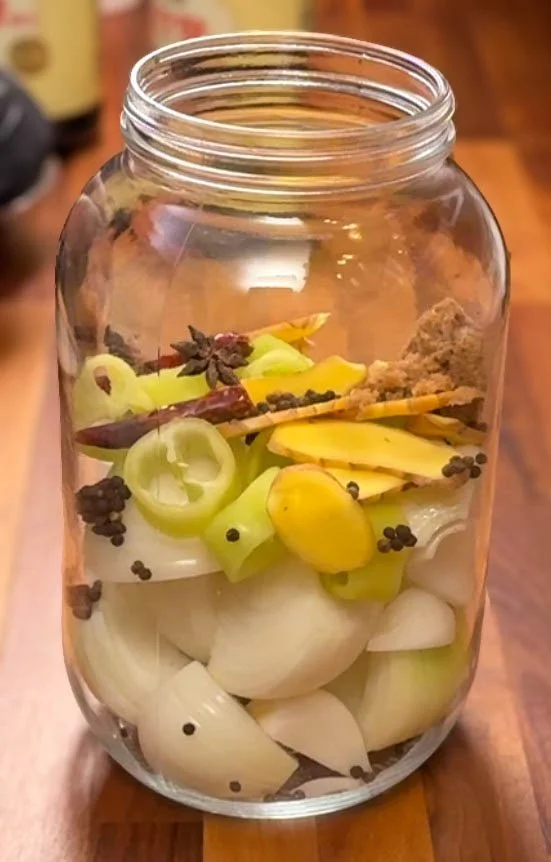
Raw ingredients in jar
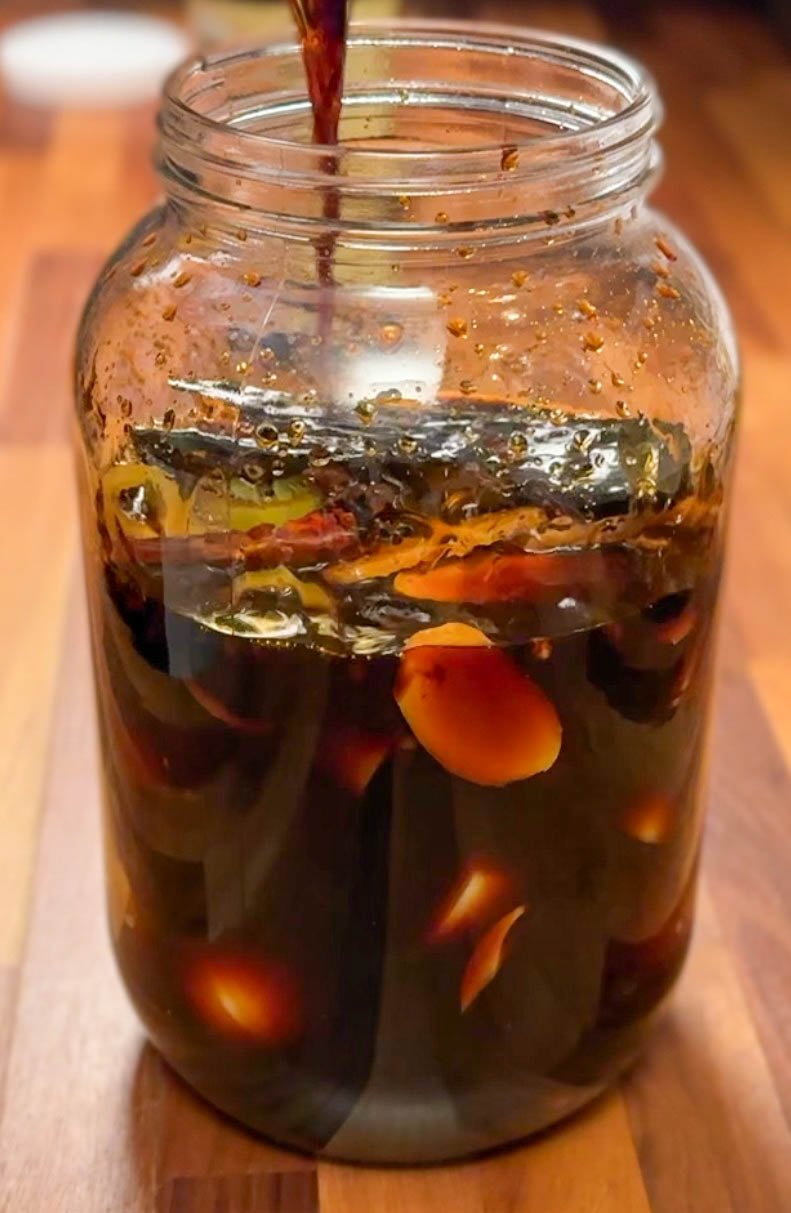
Adding soy sauce
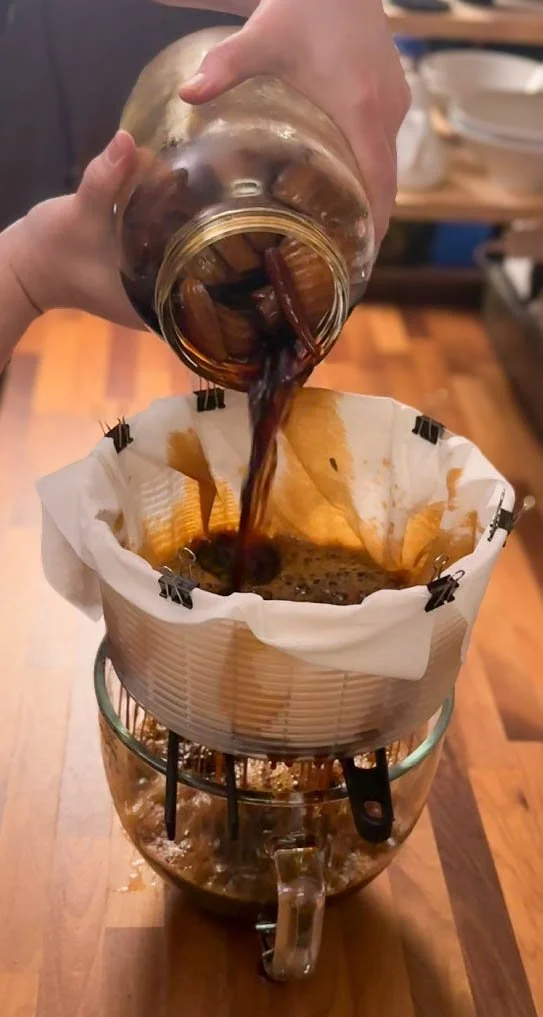
Straining sauce months later
A Jar Full of Possibilities
Less a recipe and more a suggestion of where to begin. Season your shoyu with whatever flavours you like and use frequently in your cooking. if you’ve never seasoned your shoyu and aren’t sure “what might taste good” but wanna make something that hits the mark the following guidelines are more or less the standard of what I add, amounts are really up to you but generally what fits in the palm of your hand is a good place to start but if you like more or less of something add more lor less of it. again, it’s seasonings you’d prefer and use frequently in your own cooking.
The exact character of the finished shoyu will depend on what you put into the jar, how much you use, and how long you let it sit. Consider the ingredient list a clever set of suggestions rather than “how everyone does it”. Once you've made a few batches, you'll probably develop your own preferred combination—and that's rather the point.
In any case enjoy these whimsically thought out guidelines
Detailed recipe:

Seasoned Shoyu
If you already use shoyu frequently in your cooking then you may as well try this - this is less a recipe than a set of guidelines for making your own seasoned shoyu. Think of the ingredient list as a starting point rather than a rigid formula. Add more of what you particularly enjoy, less of what you don't, or experiment with other aromatics altogether. The important things are good shoyu, a well-sealed jar, and patience. Try some today!
Ingredients
Instructions
Easy-follow Recipe:
Serving: Makes 5 Jumbo Lightlife Smart Dogs
1. 🫙 Choose Your Jar
- A glass jar with a tight-sealing lid
- Pick a clean glass jar with a tight-sealing lid and a size appropriate to the amount of seasoned shoyu you want to make, while leaving enough room for all of your seasonings.
- I generally make this a gallon at a time, so I use a jar somewhere around one and a half to two gallons.
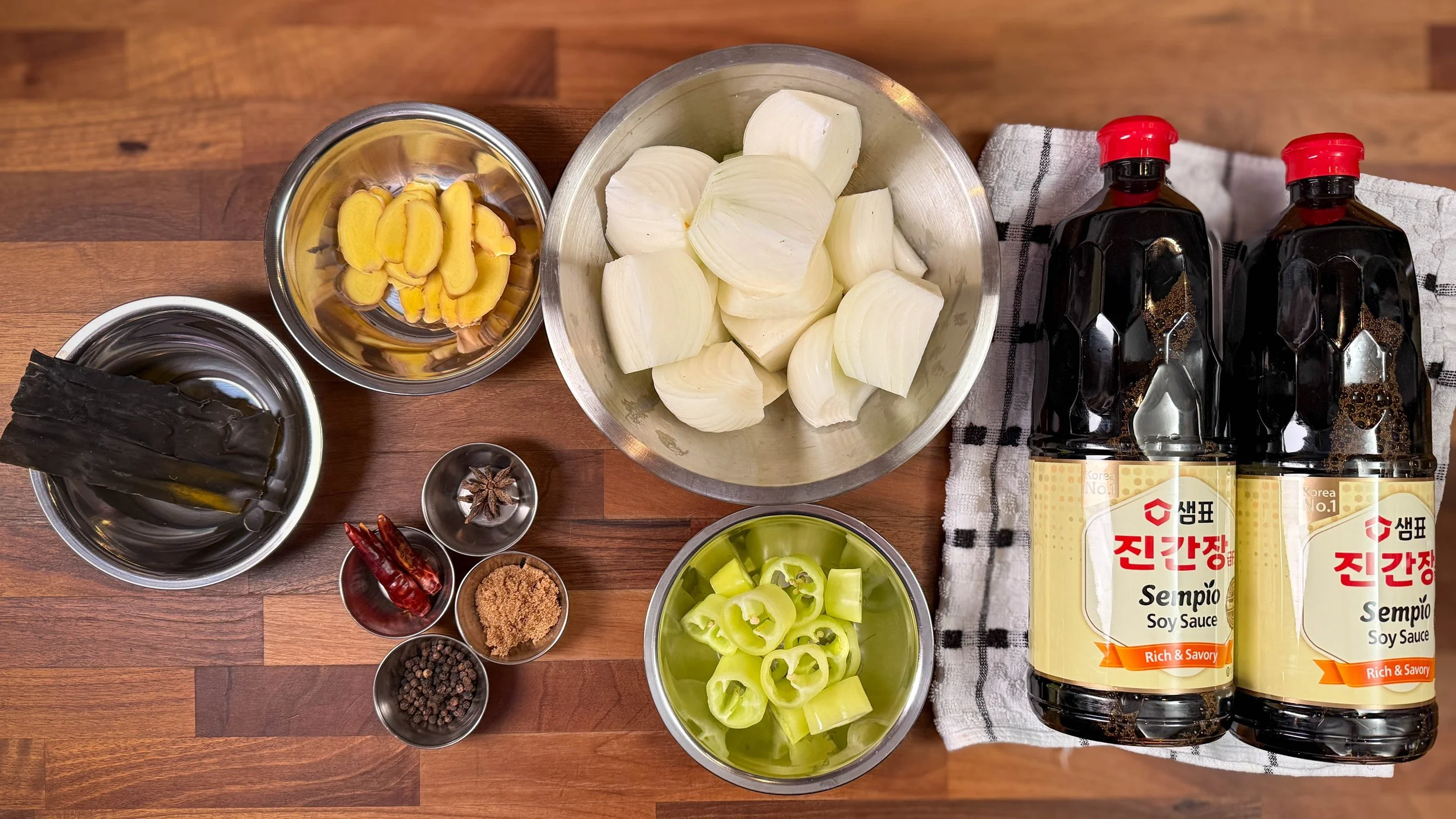
2. 🌿 Prepare the Seasonings
- Shoyu
- Dried kombu
- Fresh ginger
- Dried chilis
- Whole star anise
- Whole black peppercorns
- Brown sugar
- Maui sweet or Vidalia onions
- Fresh peppers (I like banana peppers or something similar)
- There are no particularly sacred quantities here. Choose your proportions according to the amount of shoyu you're making and how assertively you want the individual seasonings to come through.
- Cut or break down the kombu, ginger, onions, and fresh peppers, keeping the pieces roughly palm-sized or smaller.
- There is no need to stand on ceremony here and pretend you've developed extraordinary knife skills specifically for the camera.
- Chop everything up and put the seasonings into the jar.
3. 🍶 Fill & Age
- Prepared seasonings
- Shoyu
- Pour the shoyu over the seasonings until the jar is full to within roughly half an inch of the top.
- Wipe the rim thoroughly with a damp cloth, followed by a dry cloth, making sure the sealing surface is clean.
- Put the lid on and tighten it well.
- Place the jar somewhere forgettable in the refrigerator for at least 30 days.
- This is the only part of the process on which I am genuinely insistent: give it a minimum of 30 days.
- Beyond that, the schedule is wonderfully flexible. The longer the shoyu ages, the deeper and more integrated the flavors become, so let your patience have some say in the matter.
4. 🧺 Strain & Store
- Fine cotton cloth
- Clean jar or bottle
- When you're ready, strain the shoyu through a fine cotton cloth into a clean jar or bottle, removing all of the solids.
- Seal and refrigerate.
5. 🥟 Use & Enjoy
- Finished seasoned shoyu
- Use your seasoned shoyu anywhere you would ordinarily use shoyu.
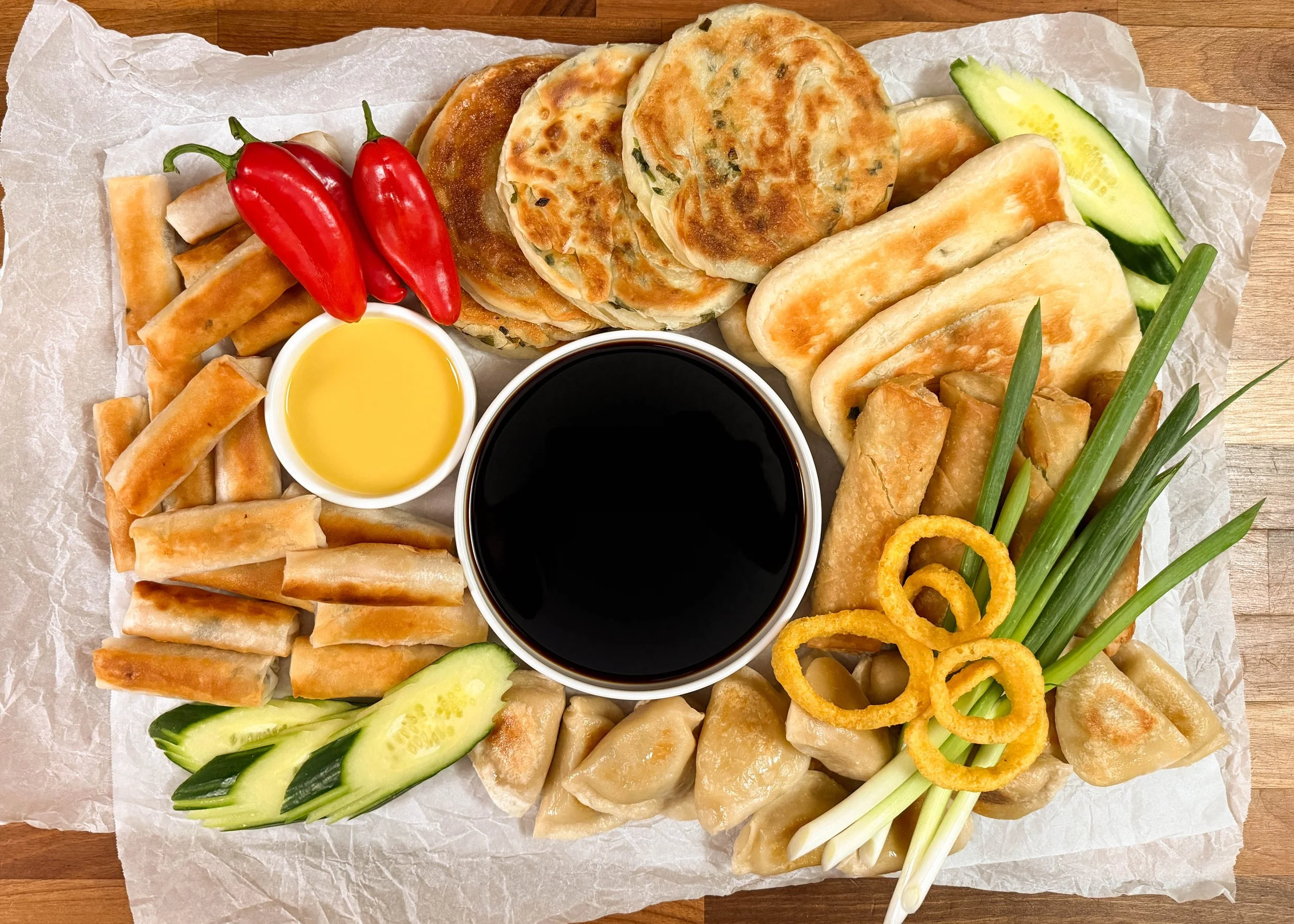
- Use it in your cooking or as a particularly exciting alternative to dipping dumplings and other appetisers into otherwise plain shoyu.